
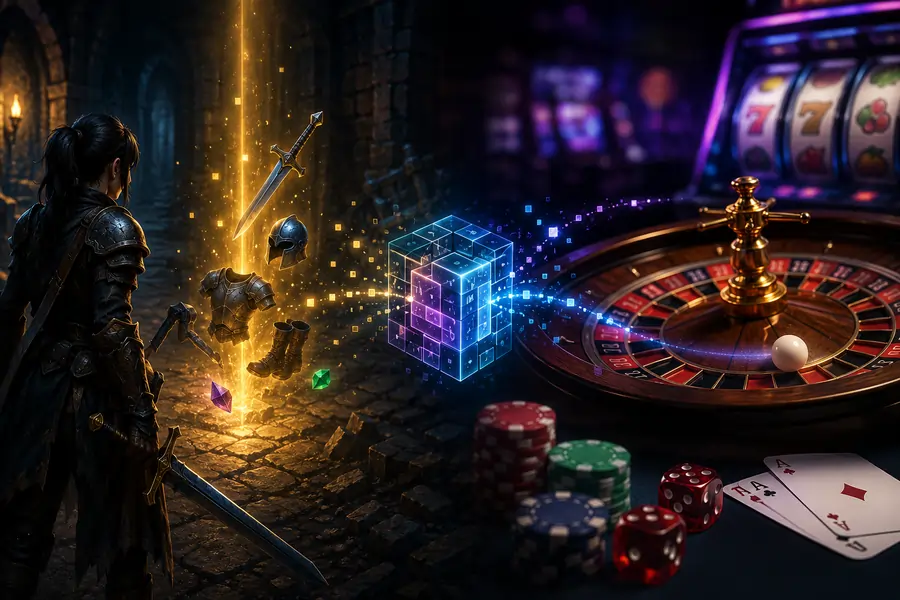
Every MMORPG player has lived through it. The boss with the 0.5% mount drop that you have killed four hundred times without seeing it. The guildmate who got it on their third run and will never let anyone forget. The forum thread insisting the drop is bugged, the superstition about killing the boss at server reset, the creeping suspicion that the game somehow knows you want it and is withholding it personally. This is life under RNG, the random number generator that governs loot in every major MMO, and the emotional education it provides is more valuable than most players realise. Because the probability concepts you absorbed farming that mount are exactly the same concepts that govern casino games, and understanding the connection makes you sharper in both worlds. This is RNG explained properly: what your years of grinding actually taught you about odds, variance and the mathematics of chance.
The random number generator: same engine, different games
At the code level, an MMO loot roll and a casino slot spin are close cousins. Both use a random number generator, a piece of software that produces unpredictable numbers, and both map those numbers onto outcomes according to predetermined probabilities. When you kill a raid boss, the server rolls a number and checks it against the loot table: numbers in one range drop the weapon, a narrower range drops the mount, everything else drops the vendor trash you already have. When you spin a slot, certified RNG software does precisely the same thing, mapping random numbers onto reel positions and payouts.
The key insight from both systems is that each roll is independent. The boss does not remember that you have killed it 399 times, and the slot does not remember the last spin. This is the single most misunderstood fact in both gaming worlds, and internalising it puts you ahead of most players at any casino table. There is no pity timer in probability itself, no accumulating entitlement to the drop, no machine that is due to pay out. Four hundred kills without the mount is not evidence the next kill is more likely: it is just what a 0.5% drop rate feels like from the inside.
Drop rates and RTP: learning to read the numbers
MMO players are unusually well prepared for one of the most important concepts in casino gaming: published probability. A veteran player checking a new raid’s loot table thinks nothing of parsing drop percentages, comparing farming routes by expected yield and deciding whether a 2% drop justifies the time investment. That analytical habit maps directly onto casino gaming’s most important number, RTP, or return to player.
RTP expresses what percentage of wagered money a game returns to players over the long run. A slot with 96% RTP returns, on average across millions of spins, 96 units for every 100 wagered, with the remaining 4% forming the house edge. Reading RTP the way you read a drop rate immediately clarifies what you are dealing with: entertainment with a known long-term cost, not an income opportunity. Players who explore platforms such as spiidi casino will find RTP figures listed in game information panels, and the MMO habit of checking the numbers before committing time or resources is exactly the right instinct to bring along: the informed player knows the odds before the first spin, just as the informed raider knows the drop rate before the first pull.
Variance: why the grind feels the way it does
If probability is the engine of RNG, variance is its personality. Variance describes how outcomes spread around the average, and it explains the emotional texture of both grinding and gambling better than any other concept. A high-variance MMO grind, chasing one ultra-rare drop, delivers long droughts punctuated by euphoric hits. A low-variance grind, farming steady crafting materials, delivers small predictable rewards with no fireworks. Neither is better; they are different experiences built on the same mathematics.
Casino games are designed along exactly this axis. High-volatility slots behave like mount farming: long stretches of nothing, occasional dramatic wins, an emotional rollercoaster by design. Low-volatility slots behave like material farming: frequent small returns that keep the balance ticking along. Table games like blackjack sit at the low-variance end with outcomes clustered close to the average. The practical lesson from MMO life applies unchanged: choose your variance to match your temperament and your budget. The player who tilts after dry streaks should not chase 0.5% mounts, and should not play high-volatility slots either.
The gambler’s fallacy: the trap your MMO brain already knows
Every probability education eventually confronts the gambler’s fallacy, the deeply human belief that past outcomes influence independent future ones. In MMO terms: the conviction that after ten failed enhancement attempts, the eleventh must succeed. At the roulette table: the certainty that after five reds, black is due. Both are the same error, and MMO players hold a genuine advantage here because most have already paid the tuition. Anyone who has destroyed a valuable item on the enhancement attempt that was definitely going to succeed has learned, viscerally, that the universe does not owe you a proc.
The flip side is the hot-hand belief, the feeling that you are on a streak and should press your luck. MMO communities ritualise this too, from lucky farming spots to loot superstitions, and the casino floor has its equivalents in every direction. The mathematics is indifferent to both: independent events remain independent whether the last five outcomes were wins or losses. Players who genuinely absorb this, and grinding is an excellent teacher, gamble more calmly, budget more sensibly and enjoy the experience more, because they are never fighting a phantom pattern.
Where the two worlds genuinely differ
An honest comparison must also mark the differences, and the biggest one is stakes. MMO RNG costs time; casino RNG costs money. Time lost to a dry farming streak is frustrating but recoverable, while money wagered is genuinely spent, and this changes how the same mathematics should be treated. The MMO mindset of just one more run is harmless at worst in Eorzea or on a Destiny raid night, but applied to real-money play it becomes loss chasing, the single most damaging behaviour in gambling. The discipline gamers apply to loot, deciding in advance how many runs a drop is worth, must be applied even more strictly to money: set a budget before the session, treat it as the cost of the entertainment and stop when it is spent, regardless of what feels due.
The second difference is design intent. MMO reward systems are tuned to retain subscribers over months, while casino games carry a built-in house edge that makes them a paid entertainment product over any long run. Communities that dissect game systems, the same culture of guides and analysis found across sites covering everything from MMO builds to progression strategies at full dive, tend to produce players who see these structures clearly: knowing how a system is designed to make you feel is the first step to enjoying it on your own terms rather than its terms.
Playing both worlds with the same discipline
The healthy endgame, in every sense, is the same in both hobbies: informed engagement within deliberate limits. Read the drop rates and the RTP. Choose variance that suits your temperament. Respect independence, ignore streaks and never chase what feels owed. Decide your budget of time or money before you start, and hold it as firmly as a raid schedule. Gaming of every kind is at its best when the player understands the system better than the system understands the player. And if real-money play ever starts to feel less like entertainment and more like a grind you cannot log out of, gamcare offers free and confidential support for anyone concerned about their gambling.
Conclusion
Years of MMO grinding are, unexpectedly, a first-class education in probability. Drop rates taught you to read published odds, dry streaks taught you variance, failed enhancements taught you independence and the whole loot-driven ecosystem taught you how reward systems shape behaviour. Carried into the casino world, that education produces exactly the right kind of player: one who knows the numbers, sets the limits and plays for the genuine fun of the game rather than the phantom of the guaranteed drop. The RNG never owed you the mount, and it never owes you the jackpot, and the player who truly understands that is free to enjoy both worlds for what they are.